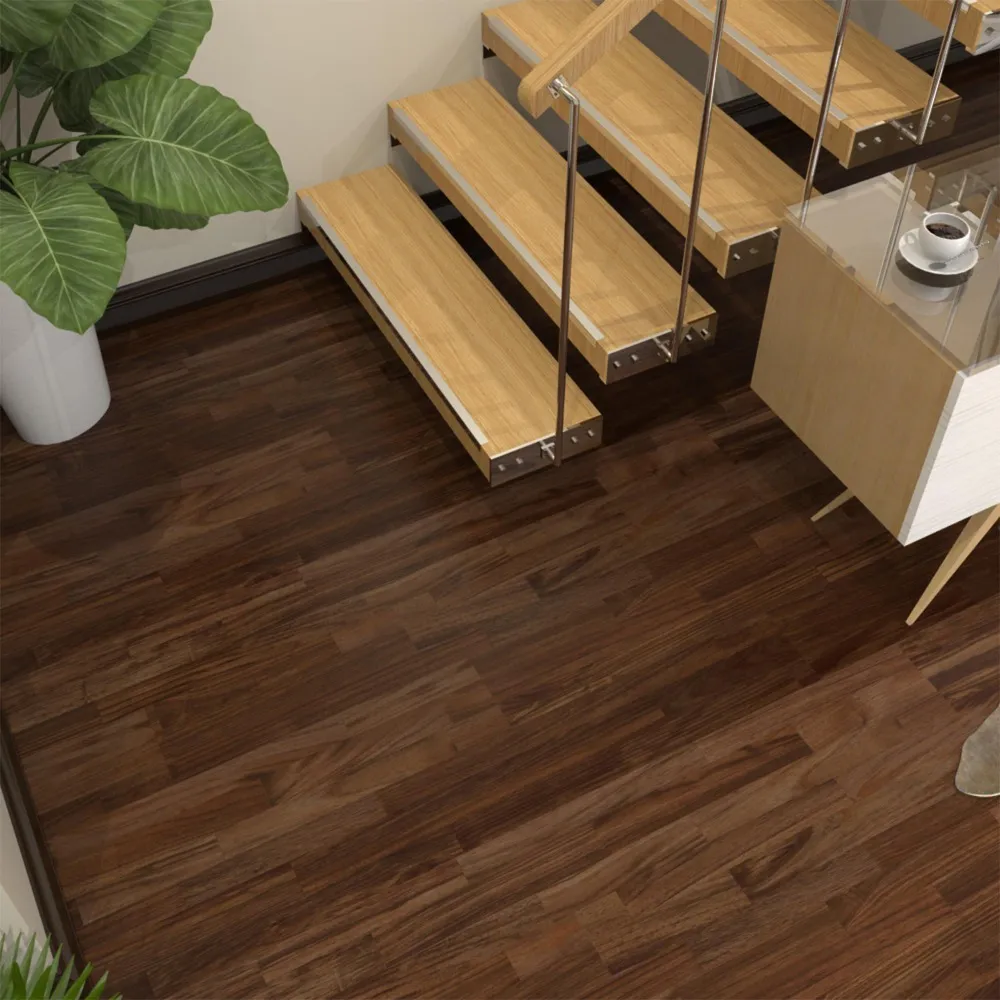
SPC flooring is increasingly used in apartments, offices, retail stores, and renovation projects because it combines a rigid core with wood or stone-inspired designs. SPC stands for Stone Plastic Composite, a dense material that offers dimensional stability and convenient installation in suitable interiors.
Product quality alone does not determine the final result. Subfloor preparation, plank construction, locking strength, underlay, and installer experience all influence how the floor performs.
When Does SPC Flooring Make Sense?
SPC flooring can be considered when a property owner wants a modern surface with straightforward upkeep and limited wet construction. Its click-lock format allows many installations to progress faster than conventional flooring work.
It is commonly considered for:
- Living rooms, bedrooms, offices, cabins, retail outlets, showrooms, and selected commercial interiors
- Renovation projects where the existing base is stable, dry, level, and suitable for a floating floor system
Bathrooms, continuously wet spaces, or areas with unresolved seepage require careful evaluation. A water-resistant plank does not correct moisture rising from the subfloor or leaking through walls.
Understand the Product Layers
An SPC plank generally includes a protective wear layer, decorative film, rigid core, and backing or underlay. Each layer contributes to appearance, stability, comfort, and durability.
A thicker plank is not automatically better. Buyers should also examine wear-layer specifications, locking quality, surface coating, edge construction, and warranty conditions. Product samples should be joined together to assess whether the edges lock firmly and remain aligned.
Questions to Ask the Supplier
Before confirming the flooring, ask:
- Is the selected collection intended for residential or commercial traffic?
- What does the warranty cover and exclude?
- Is an attached underlay included?
- Are matching skirting and transition profiles available?
- Can replacement planks be sourced later?
- How should spills and stains be cleaned?
- What expansion space is required?
Clear answers help distinguish a complete flooring solution from a product-only quotation.
Installation Readiness Indicators
A responsible installer checks the base before beginning work. The subfloor should be dry, clean, and level. High points, deep joints, loose tiles, and cracked sections may require correction.
The flooring should also be planned around door clearance, fixed furniture, room transitions, and expansion gaps. Randomly starting from one corner can create narrow, unattractive cuts at the opposite wall.
Compare the Complete Cost
The final price may include flooring, underlay, skirting, profiles, floor levelling, transport, installation, and furniture movement. Comparing only the plank rate can create an inaccurate budget.
Dels Decor assists property owners in Gurugram with SPC flooring selection, site evaluation, and installation planning. Request a complete area-wise quotation that clearly includes preparation work, accessories, fitting, and applicable warranty details.
Keywords