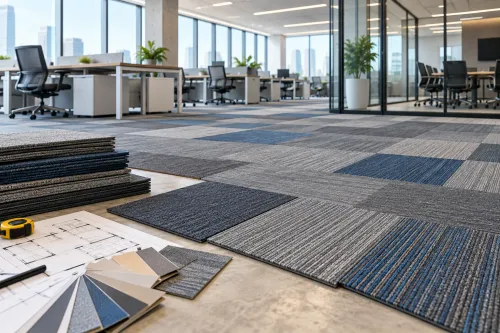
Office flooring must manage continuous foot traffic, chair movement, dust, sound, and periodic layout changes. Broadloom carpet can provide comfort, but repairing a damaged section may be inconvenient. Hard flooring is easy to clean, although it can increase noise in open-plan workplaces.
Carpet tiles offer a middle path. Their modular format provides the softness and acoustic qualities of carpet while allowing individual sections to be accessed or replaced.
Why Offices Choose Modular Carpet
Carpet tiles are manufactured as separate units that fit together across the floor. They are available in multiple colours, patterns, textures, and performance grades.
Their practical advantages include:
- Individual damaged or stained tiles can be replaced without removing the entire floor covering
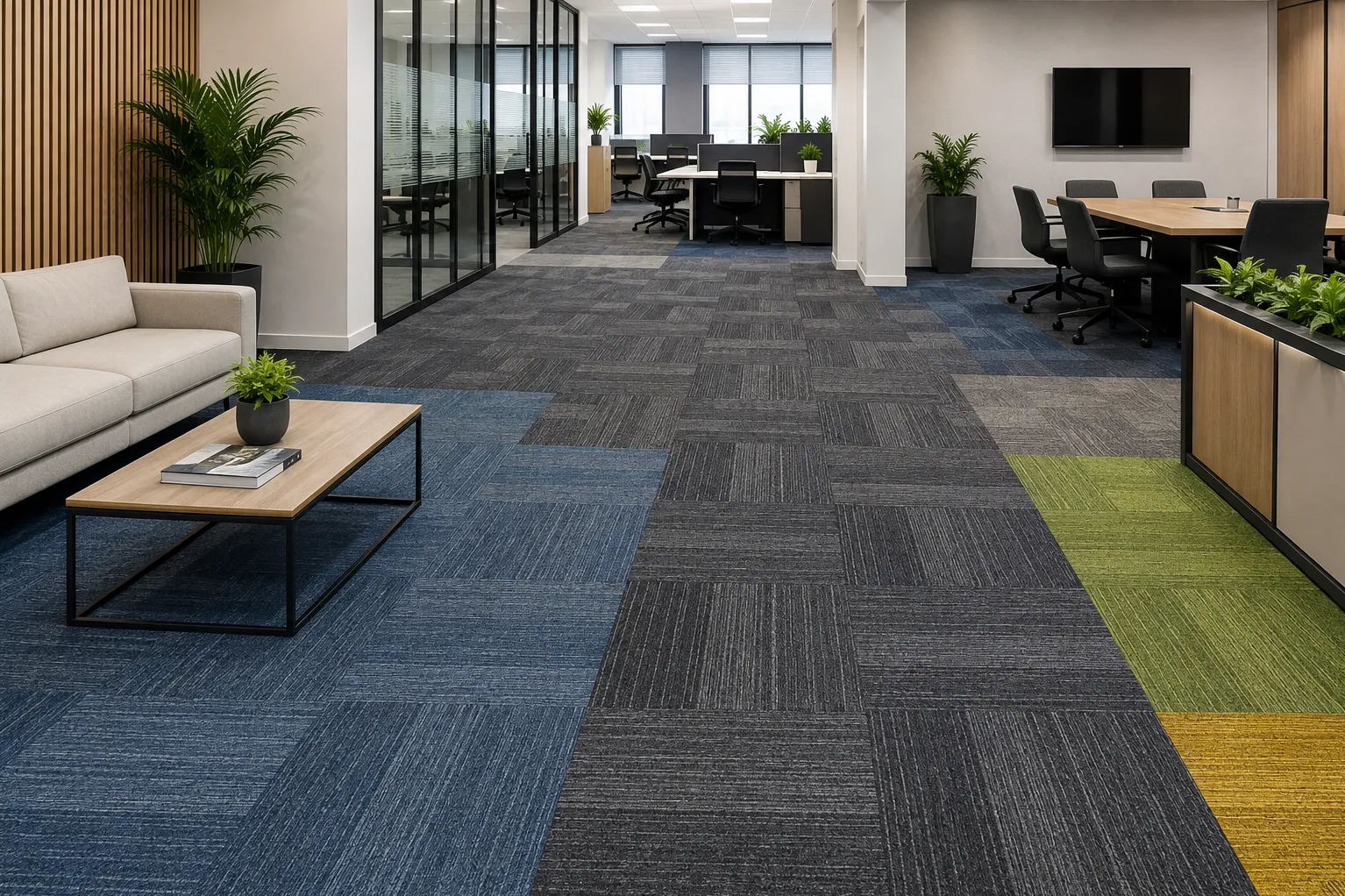
- Different colours can define workstations, meeting areas, corridors, reception zones, and collaborative spaces
This flexibility is useful for Gurugram offices that expand teams, move furniture, or update interior layouts over time.
Carpet Tiles or Broadloom Carpet?
Broadloom carpet creates a continuous appearance with fewer visible joints. It may suit formal rooms where a seamless finish is the main priority. Carpet tiles show a modular pattern, although careful installation and directional planning can make joints less noticeable.
Carpet tiles are generally more convenient where access to underfloor wiring is needed. A tile can be lifted, the required work completed, and the section reinstalled. This can reduce disruption in technology-driven offices.
Assess Traffic Levels by Zone
The reception, lift lobby, corridor, and entrance typically receive more traffic than private cabins. Using the same light-duty material everywhere may lead to uneven wear.
A practical specification plan may include:
- Heavy-duty tiles for entrances and main circulation routes
- Commercial-grade tiles for workstations and meeting rooms
- Stain-conscious colours for pantry-adjacent areas
- Visually distinctive patterns for collaborative zones
- Neutral designs for cabins and formal meeting spaces
Consider Acoustics and Comfort
Open offices can become noisy due to conversations, phone calls, and movement. Carpet tiles help absorb some reflected sound and reduce the impact noise created by footsteps and chairs.
Products with suitable backing may provide additional acoustic and underfoot benefits. The final result also depends on the subfloor, furniture, ceiling, partitions, and overall room design.
Avoid Common Selection Mistakes
Very light colours can show stains in busy areas, while highly detailed patterns may make compact rooms appear cluttered. Choosing purely on appearance can also overlook wear ratings, backing quality, static control, and maintenance needs.
Extra tiles should be retained after installation. They provide matching replacements if isolated areas become damaged later.
Prepare the Base Carefully
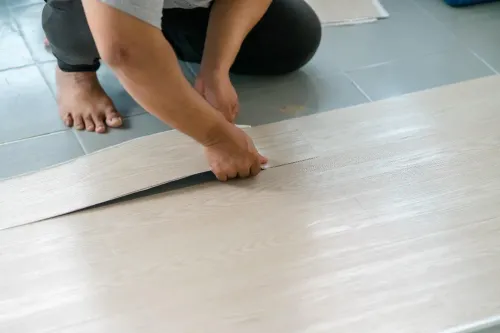
The subfloor should be level, dry, clean, and free from loose material. Poor preparation can cause raised edges, uneven joints, or movement. Installation direction must also be planned because rotating tiles changes how their texture reflects light.
Dels Decor supports offices and commercial properties in Gurugram with carpet tile selection and installation planning. Schedule a site review to match each workplace zone with an appropriate performance grade and design.
Keywords