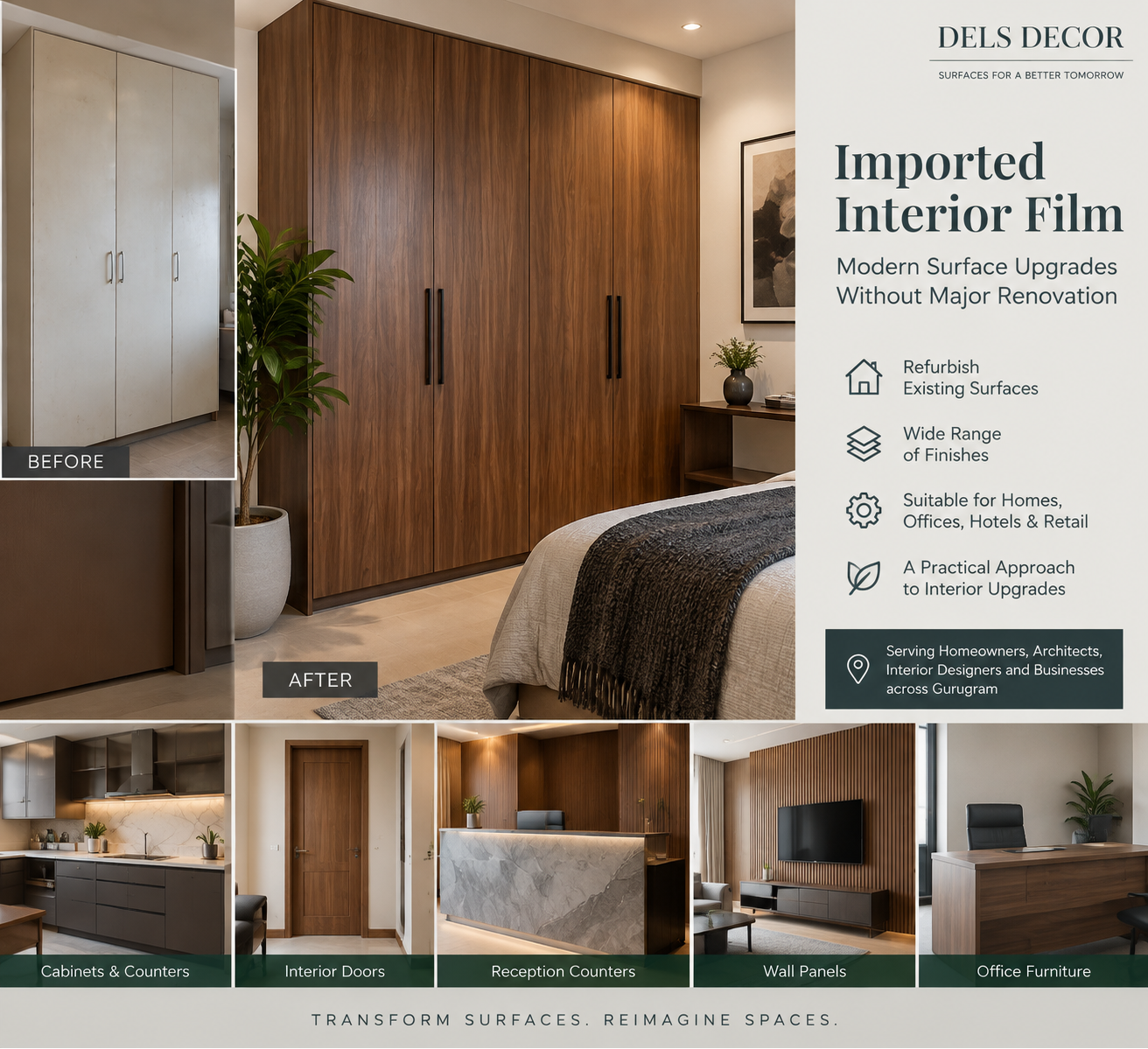
Changing the appearance of an interior does not always require removing existing surfaces or carrying out extensive civil work. In many residential and commercial projects, Imported Interior Film can be considered when the objective is to refresh furniture, doors, wall panels, counters, cabinets, or other suitable surfaces while retaining much of the existing structure.
This approach is particularly useful for properties where owners want a noticeable visual change with comparatively less disruption.
For homeowners, architects, interior designers, offices, hotels and retail property owners in Gurugram, understanding where interior film works well is important before selecting a finish.
What Is Imported Interior Film?
Interior film is a decorative surface material designed to be applied over compatible substrates. Depending on the collection, it can reproduce the visual character of wood, stone, metal, fabric, leather, or solid-colour finishes.
Rather than replacing an entire panel, cabinet shutter, door, or similar element simply because its visible finish has become dated, the existing surface may sometimes be refinished using an appropriate interior film.
This makes the material relevant to both new interior projects and selected renovation applications.
Where Can Interior Film Be Used?
Possible applications include:
- Wardrobe shutters
- Cabinet surfaces
- Interior doors
- Wall panels
- Reception counters
- Office furniture
- Retail display areas
- Decorative partitions
- Selected ceiling features
- Hotel interior surfaces
The existing substrate should always be assessed before installation. Damaged, damp, uneven, unstable, or otherwise unsuitable surfaces may require correction first.
Why Surface Preparation Matters
The final appearance depends heavily on what lies underneath the film.
Dust, cracks, loose material, moisture, uneven edges, or poorly repaired surfaces can affect adhesion and visual consistency. Applying an attractive film over a weak base does not solve an underlying substrate problem.
Surface preparation should therefore be treated as an important part of the project rather than an optional step.
Select the Finish in the Actual Interior
A small sample viewed separately can look very different when applied across a larger area.
Natural light, artificial lighting, flooring, curtains, furniture and wall colours influence how a decorative finish appears.
A dark wood-look film, for example, may create an elegant effect in a spacious reception area but could make a compact room feel visually heavier. A lighter finish may create a more open appearance without necessarily matching every design concept.
Consider Selective Refurbishment
Suppose a wardrobe remains structurally functional but its exterior looks dated. Replacing the complete unit could involve dismantling, carpentry, material disposal and additional finishing work.
Where the substrate is suitable, refinishing the visible surfaces may offer another approach.
The same principle can be considered for office cabins, reception desks, hotel furniture, retail counters and selected doors.
Look Beyond Appearance
Colour and texture matter, but practical requirements should also influence selection.
Before finalising a product, consider its intended application, maintenance needs, surface compatibility, expected usage, edge detailing and installation environment.
For interior projects across Gurugram, Dels Decor can help customers evaluate Imported Interior Film options according to their surface condition, preferred design and intended application.
If you are considering an interior refresh without unnecessarily replacing every existing element, discuss the surfaces you want to transform with the team. Reviewing samples and application suitability before finalising the material can help you plan a more practical interior upgrade.
Keywords