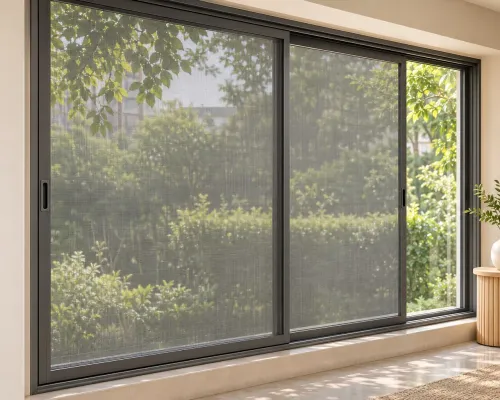

Afternoon sun entering through glass can raise room temperatures, create bright patches on floors and walls, and turn a television or monitor into a reflective surface. You will be able to compare films by their heat and light ratings, select an appropriate appearance, and check whether the product suits your windows before installation.
Key takeaways
- Select film by heat rejection, glare reduction, and visible-light transmission.
- Use neutral or ceramic film when you want performance without a mirror-like appearance.
- Check the glass type and manufacturer guidance before applying any film.
- Match film strength to each window’s orientation, room use, and sunlight exposure.
How Sun Control Film Reduces Heat Through Glass
Sun control film lowers indoor heat by reducing the solar radiation that passes through the window. It reflects part of that energy away and absorbs another part within the film, reducing glass heat gain before it reaches the room.
Darkening the glass alone does not prove effective heat control: a tinted film can make a room look dim while still allowing substantial solar energy through.
The key comparison is the solar heat gain coefficient, or SHGC. A lower SHGC means less solar heat enters through the complete window-and-film assembly, which usually matters more for summer cooling than labels such as “tinted” or “reflective.”
| Rating | What it measures | What it does not prove |
|---|---|---|
| SHGC | The fraction of incident solar energy that enters through the glazed assembly, including energy absorbed by the glass and film that flows indoors | Winter insulation performance |
| Visible transmittance | The percentage of visible daylight passing through the glazing | The amount of heat entering |
| U-factor | Heat conducted through the window, frame, and glazing layers | Solar energy blocked by the film |
A claim such as “35% solar-energy rejection” or “99% rejection” refers to a stated test method and solar-energy range, not a guaranteed percentage reduction in your cooling bill. Check the underlying SHGC and the glass used for the test. The same film can produce different results on single-pane, double-pane, coated, or shaded windows.
A film that rejects solar gain also does not replace low-e glazing when your priority is reducing conducted heat through the window.
How Film Reduces Glare Without Making Every Room Dark
A film improves visibility by reducing the brightness reaching a screen or work surface, rather than removing daylight altogether. Its visible light transmission (VT) rating tells you how much visible light passes through the glass: lower VT usually delivers stronger sunlight glare reduction, but it also darkens the room and can increase daytime lighting use.
| VT choice | Practical result | Suitable use |
|---|---|---|
| Higher VT | Preserves more daylight but leaves more bright contrast and reflections | Rooms needing an open, bright feel |
| Medium VT | Balances useful daylight with noticeable glare control | General living rooms, offices, and workstations |
| Lower VT | Provides stronger television glare reduction and softens harsh sun patches | Direct-afternoon rooms with persistent screen reflections |
Look at the window from your normal seating position before choosing the film. A television facing a west window may need more glare control than a shaded bedroom, while a desk beside north-facing glass may work well with a higher-VT option. Apply the darker product to problem elevations or rooms instead of every pane.
Compare the stated VT with visible reflectance and SHGC values; “rejects glare” is not a measurable comparison. A dark film can reduce sunlight glare effectively yet leave the room visually dull, so choose the lowest light level that keeps screens readable without forcing electric lights on during the day.
Choosing Heat and Glare Performance for Each Window
Choose film performance by combining window orientation, climate, and room use—not by selecting the highest rejection figure. East-facing windows receive low-angle morning sun, while west-facing windows receive harsher afternoon sun; both often need stronger solar control than shaded south-facing windows in the Northern Hemisphere.
| Orientation or situation | Suitable performance choice | Reason |
|---|---|---|
| East-facing windows | Moderate to high solar control; lower VT for screen rooms | Morning glare arrives at a low angle and can wash out monitors |
| West-facing windows | High solar control; lower VT where afternoon glare is severe | Late-day heat and glare are difficult to block with roof overhangs |
| South-facing windows | Moderate control when horizontal exterior shading exists | Correctly designed overhangs already block much of the high summer sun |
| Hot climates | Lower SHGC and stronger solar rejection | Reduce cooling demand and indoor heat |
| Cool or mixed climates | Moderate rejection with higher VT | Preserve daylight and avoid blocking useful winter sun |
Climate-based film selection also depends on the room. Use stronger glare control in offices, television rooms, and west-facing living spaces; choose higher visible transmittance for kitchens, corridors, and rooms that need daylight.
A 35% to 99% solar-energy-rejection rating describes the share of incoming solar energy the film rejects under its test conditions, not guaranteed energy savings or a universal indoor temperature reduction. The result changes with the existing glass, glazing layers, frame, shading, window area, and air-conditioning use.
The highest figure can make a room unnecessarily dark, so compare it with visible transmittance and SHGC before deciding.
Comparing Reflective, Tinted, Neutral, Ceramic, and Low-Reflectivity Films
Choose the film that balances daylight, exterior views, glare control, and the appearance you will see from inside—not simply the darkest or most heat-rejecting option.
| Film type | Appearance and performance trade-off | Best fit |
|---|---|---|
| Reflective window film | Strong exterior reflection can improve daytime privacy and reject substantial solar energy, but it changes the building’s appearance and can reduce outward brightness. | Direct sun, daytime privacy, and high glare concern |
| Tinted film | Darkens incoming light and reduces glare, yet can make rooms feel dim and alter colours behind the glass. | Rooms where glare matters more than maximum daylight |
| Neutral film | Limits solar gain with less colour shift than coloured tint, preserving a more natural interior view. | Homes and offices where daylight and interior appearance matter |
| Ceramic window film | Uses a low-reflectivity appearance while reducing selected solar wavelengths; it preserves a clearer façade but may cost more than basic films. | Clear exterior views, subtle appearance, and strong sun control |
| Low-reflectivity film | Produces little mirror effect, so it offers less daytime privacy than reflective film but keeps the glass visually unobtrusive. | Design-sensitive façades and unrestricted outward visibility |
Compare visible transmittance (VT), visible reflectance, SHGC, and UV transmittance on the product data sheet. Lower VT usually cuts glare more effectively, but it also reduces daylight; lower SHGC targets solar heat rather than merely making glass look dark.
Daytime privacy is conditional. Reflective or tinted glass loses that advantage after dark when indoor lights make the room brighter than the outdoors, so use blinds or curtains for nighttime privacy. A neutral ceramic film often suits rooms where you want heat and glare control without a mirrored façade.
Checking Glass Compatibility Before Installation
A film is safe only when its heat load has been checked against the complete glazing assembly, not just the room’s appearance. Ask for written compatibility confirmation covering pane type, thickness, tint, coating, edge condition, frame, and whether installation is interior or exterior.
An unsuitable combination can create temperature differences that crack glass or stress sealed edges.
1. Identify the glass. Record whether each window is single-pane glass, double-glazed windows with a sealed cavity, laminated glass, or tempered glass. Check for a low-emissivity coating, factory tint, reflective layer, or acoustic interlayer.
2. Inspect the glazing system. Note pane thickness, spacer material, gas-filled cavities, edge seals, frame depth, and any chips or seal failure. Do not apply film over damaged glass or fogging between panes.
3. Match the film data to that exact assembly. Request a compatibility chart or written approval stating the permitted glass type, coating position, thickness, and film side. A film approved for clear single-pane glass is not automatically approved for low-e double glazing or laminated glass.
4. Check the window warranty. Give the manufacturer or supplier the film’s technical sheet and obtain confirmation in writing; installation can void coverage when the film is unapproved.
5. Put the inspection on the job record. Dels Decor can use the window schedule, product data, and manufacturer’s guidance to confirm each pane before fitting, rather than treating one approval as permission for every window. Photograph labels and note rejected panes.
Related product
 | Garware Suncontro Defebdowindo Film Suncountrol Film Garware Brand solar energy rejection 35%to99% View product → |
Frequently asked questions
How does sun control film reduce indoor heat through glass?
It reflects part of solar energy away from the window and absorbs another part in the film, reducing heat that enters the room.
Can sun control film reduce glare without making a room dark?
Yes. Choose a film with suitable visible-light transmission so it softens glare while preserving useful daylight.
How should you choose film performance for each window?
Consider the window’s direction, sunlight exposure, room use, and the balance between heat rejection, glare control, and daylight.
What is the difference between reflective, tinted, neutral, ceramic, and low-reflectivity films?
Reflective films create a stronger mirrored appearance, tinted films darken the glass, neutral films preserve a more natural view, ceramic films reduce heat with lower visible change, and low-reflectivity films limit the mirror effect.
How do you check glass compatibility before installing sun control film?
Identify the glass type, coating, pane arrangement, and manufacturer restrictions, then confirm that the selected film is approved for that configuration.