A modular floor only performs well when its layout, substrate, adhesive, and replacement plan are decided before installation begins. By the end, you will be able to estimate quantities, choose an installation method, compare carpet tiles with other commercial floors, and specify evidence for performance claims.
Key takeaways
- Map columns, doorways, glazing, penetrations, and furniture before ordering tiles.
- Choose adhesive based on how often the floor needs access or tile replacement.
- Keep spare tiles from the same batch for future repairs and colour matching.
- Compare rolls, hard surfaces, and tiles by maintenance, access, waste, and replacement needs.
Plan the Tile Grid Around How the Office Works
Measure each room at its longest and widest points, then record columns, doorways, glazing lines, service penetrations, and fixed furniture. Put those dimensions on a plan instead of relying on one area figure: an irregular perimeter creates more cuts than a clear rectangle.
Set the grid from a visible corridor or main wall so narrow slivers do not land at the entrance or beside workstations.
Choose the module with the building grid. 500 × 500 mm carpet tiles suit a finer planning grid; 600 × 600 mm carpet tiles reduce the number of joints across a comparable area. Check the selected size against raised-access-floor panels, workstation modules, and door clearances before approval.
A grid that ignores furniture creates awkward strips and extra waste.
Use this carpet tile quantity calculation for each room:
- Divide the measured floor area by the area of one tile.
- Add 5 to 10 percent for perimeter cuts, columns, irregular edges, and installation damage.
- Increase the allowance for diagonal layouts, tight patterns, or late design changes.
- Order additional replacement tiles from the same dye lot and retain them on site.
Agree the carpet tile layout before installation. A monolithic layout keeps pile direction consistent, while a quarter-turn layout changes the visual texture; light can make the same tile appear a different colour after its direction changes. Mark the approved orientation on the plan and keep spare tiles labelled with their room and dye lot.
Prepare the Subfloor and Choose an Adhesive That Matches Access Needs
Installation starts with a sound, clean, level substrate—not with adhesive. For concrete, concrete subfloor preparation means grinding ridges, filling cracks and depressions, vacuuming dust, and removing old adhesive. Confirm that screed has cured and dried.
Remove or mechanically prepare loose tiles, wax, polish, and unstable coatings on existing flooring, or the new tiles can shift or debond.
Before carpet tile installation, check:
- Use moisture testing ASTM F2170 with in-situ probes for concrete relative humidity.
- Use an ASTM F1869 moisture test to measure vapour emission.
- Compare both results with the limits stated for the selected tile and adhesive.
- On raised access floors, replace damaged panels, clean joints, correct height differences, and align tile seams with panel joints where practical.
- Set tile arrows or pattern consistently, then roll the installed floor as directed.
| Adhesive | Access result | Use and warning |
|---|---|---|
| Releasable tackifier | Easiest tile removal | Suits offices needing frequent access below the floor; it cannot correct dampness or contamination. |
| Pressure-sensitive adhesive | Individual tiles remain replaceable | Use after the substrate passes testing; follow open-time instructions to prevent shifting at seams. |
| Full-spread adhesive | Strongest continuous bond | Choose for heavy rolling loads or demanding traffic; future removal takes more labour and can damage the substrate. |
Build a Repair Plan Before the First Tile Goes Down
A single stained or damaged tile should not force you to close an entire room. A planned replacement uses stored stock, a mapped grid, and an adhesive system that lets you lift one module without tearing up adjacent flooring.
1. Before installation, buy spare carpet tiles from the same production run. Store them flat, sealed, and away from sunlight; later purchases can differ in colour, texture, wear, and carpet tile dye lot.
2. Photograph the finished grid and record each tile’s orientation. Mark the storage location of the spare carpet tiles, because a matching replacement is useless if its pile direction is reversed.
3. When damage occurs, move furniture clear, vacuum loose grit, and lift the tile from a corner using a broad scraper or suction lifter. Remove the entire tile rather than cutting out only the visible stain.
4. Inspect the exposed floor for moisture, dust, ridges, or failed adhesive before fitting the replacement. Pressure-sensitive adhesive supports future tile removal, but it will not bond reliably to a damp or contaminated substrate.
5. Fit the replacement in the recorded orientation, align all four edges, and press it firmly into place. Roll the repaired area if the adhesive instructions require it, then return furniture only after the stated set time.
Keep several spare tiles for high-traffic and sunlit zones, not just one box for the whole office. If no matching stock remains, move a less visible existing tile into the damaged area and use the closest new tile in a cupboard or low-visibility corner.
Compare Carpet Tiles With Rolls and Hard-Surface Flooring
A busy office with frequent spills, rolling chairs, or phased refurbishment usually gets more value from carpet tiles than from a continuous floor. Their strongest advantage is localized replacement: remove one stained tile instead of clearing furniture and lifting an entire room.
In a carpet tiles vs carpet rolls decision, tiles also simplify phased installation and future access to raised floors. Keep spare tiles from the same dye lot; later production can change colour, texture, or pile direction.
| Option | Carpet tiles are better when | Choose the alternative when |
|---|---|---|
| Carpet rolls | Stains, damage, or access work will affect isolated areas | You need a seamless appearance across a large, simple room with minimal repair activity |
| Luxury vinyl tile | Offices need quieter acoustics, warmer underfoot comfort, and concealment of minor visual wear | Frequent wet cleaning, chair movement, or liquid spills make a non-porous surface more practical |
| Ceramic tile | Staff spend long periods standing and sound control matters | Wet zones, heavy dragging, or exceptional surface hardness justify a rigid finish |
| Laminate | You want lower impact noise and easier replacement of small damaged areas | The floor needs a wood appearance with dry, stable conditions and fewer rolling loads |
| Polished concrete | You need a hard, low-fuss surface for dust, grit, and heavy traffic | Foot comfort, acoustics, and quick localized repairs matter |
For office flooring comparison, dense low-profile tile suits wheelchairs, carts, and castors better than thick soft pile, but transitions still require careful detailing. Commercial flooring maintenance remains straightforward only when the substrate is dry, smooth, and sound; carpet tiles will not hide moisture, ridges, or failed adhesive.
Verify Performance Documents Before You Approve the System
Approve the complete tested system, not a fibre-and-backing description. Commercial carpet tile specifications should identify the tile construction, adhesive, substrate limits, test method, product version, and installation layout covered by each report.
| Document or test | What to verify | Why it matters |
|---|---|---|
| Fire classification | EN 13501-1 rating, or ASTM E648 and ASTM E662 results | Confirms reaction to fire and smoke performance for the project |
| Castor-chair suitability | Test evidence for the complete tile, backing, adhesive, and substrate; ask for EN 985 or equivalent rolling-load data | Seams and tile edges fail first under office chairs and wheeled equipment |
| Moisture limits | ASTM F2170 in-situ relative humidity or ASTM F1869 vapour-emission results, plus the adhesive manufacturer’s limit | Excess moisture can cause debonding, bubbling, and adhesive failure |
| Static control flooring | Electrical resistance or body-voltage test method, such as ISO 6356 or AATCC 134 | Protects sensitive equipment where static discharge matters |
| Indoor-air emissions | CDPH Standard Method v1.2 results for the tile, adhesive, and floor preparation products | “Low VOC” alone proves nothing about measured emissions |
| Dimensional stability and acoustics | Test results after heat or moisture exposure, plus acoustic ratings where sound control is required | Prevents shifting seams and avoids buying performance the product has not demonstrated |
Ask for the warranty’s commercial traffic definition, wear threshold, backing and dimensional-stability coverage, seam exclusions, moisture exclusions, adhesive requirements, cleaning obligations, and remedy. Check whether the warranty covers castor-chair damage or only fibre wear.
If you are comparing a quotation from Dels Decor, ask the supplier to identify the exact tested product code and attach its installation and warranty documents rather than accepting a generic catalogue specification.
Related products
 | Carpet Tiles & Carpet Rolls Carpet Tiles & Carpet Rolls with Dels Décor Transform Your Space with Dels Décor Flooring Solutions At Dels Décor, we bring you premium carpet tiles... View product → |
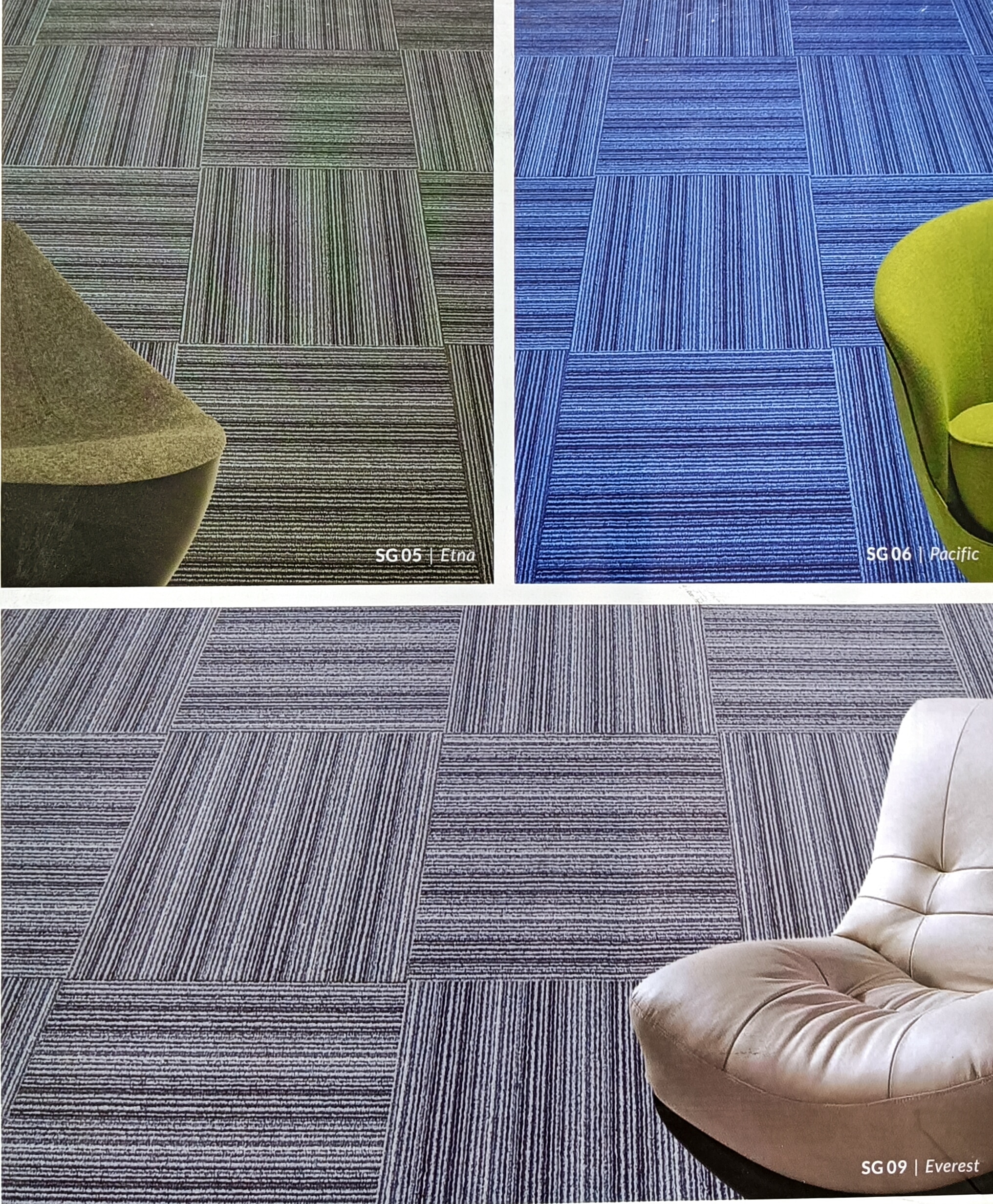 | Carpet Tiles ₹150 Yarn -100% Nylon 6 Backing - PVC with FiberGlass Pile Hight - 3.0 mm Size - 50cm*50cm View product → |
Frequently asked questions
How should you plan a carpet tile grid for an office?
Measure the longest and widest points, mark columns, doorways, glazing lines, service penetrations, and fixed furniture, then place the grid on a floor plan.
How do you choose an adhesive for carpet tiles?
Match the adhesive to access needs: choose a releasable system when tiles or services require regular lifting, and confirm compatibility with the subfloor and tile backing.
What should a carpet tile repair plan include?
Keep spare tiles from the installed batch, record the tile layout, and identify high-traffic or spill-prone areas for faster replacement.
How do carpet tiles compare with rolls and hard-surface flooring?
Compare them by installation waste, repair method, service access, cleaning demands, acoustic performance, durability, and the cost of replacing damaged areas.
Which performance documents should you verify before approving carpet tiles?
Request the product technical data sheet, installation instructions, fire-test classification, wear information, backing details, adhesive compatibility, and indoor-air-emissions documentation.