A carpet can feel soft yet perform poorly if the pile, cushion, backing, and room use do not match. By comparing those factors with colour, pattern, traffic, cleaning needs, and installation limits, you can choose a floor that feels comfortable and remains visually appropriate after daily use.
Key takeaways
- Choose dense, low-pile carpets for busy rooms and office-chair traffic.
- Use lighter colours to open rooms and darker patterns to disguise marks.
- Compare broadloom, carpet tiles, and rugs against the room’s layout.
- Reject carpet where moisture, spills, or cleaning demands outweigh comfort.
Match Carpet Comfort to How the Room Is Used
Match carpet comfort to the room’s use: a deep, soft pile feels inviting in a bedroom, but it can flatten quickly under office chairs or constant foot traffic. Pile height affects underfoot cushioning; pile density determines how well the surface resists crushing.
- For barefoot bedrooms, choose a fibre with a soft hand and a pile that feels springy rather than merely tall. A dense cut pile gives warmth without relying on excessive height.
- For living rooms, select balanced density and softness. A medium pile offers comfort while making vacuuming and furniture movement easier.
- For corridors or rooms used with shoes, choose a short, dense pile. It hides wear better and gives more stable footing than a loose plush surface.
Fibre changes the experience. Wool feels naturally warm and resilient, while nylon offers strong recovery from compression; polyester can feel soft but needs careful evaluation for crushing and traffic performance. Do not treat face weight or plushness as a complete quality score.
The cushion beneath the carpet controls impact, resilience, and sound. For residential use, underlay or cushion thicknesses up to 7/16 inch are a limit to check only when compatible with the carpet and manufacturer guidance, not a universal standard.
A cushion that is too soft can cause wrinkling, while one that is too thin or dense can feel hard.
Thermal feel also depends on the floor below: carpet over a cold concrete slab needs better insulation than carpet over a timber floor. Ask for a sample installed over the proposed cushion, then test it barefoot and under a chair.
Use Colour and Pattern to Shape the Room
Keep carpet colour coordination quiet when the room already contains strong decoration. A softly textured neutral carpet gives furniture and artwork room to lead, while a highly patterned carpet needs simpler surrounding surfaces.
Match the carpet to wall and curtain tones without making every surface identical. Choose a carpet one or two steps lighter or darker than the walls. Repeat one subdued carpet colour in the curtains or upholstery, then leave the remaining fabric plain.
Use pattern scale to control visual weight. A large motif can dominate a small room and restrict furniture placement, while small-scale texture or a multitone design offers flexibility and hides minor soiling. If the sofa has a bold print, choose a quieter carpet. If the upholstery is plain, the floor can carry the pattern.
Treat lighting as part of carpet colour coordination. View a large sample in daylight and under the room’s evening bulbs: warm light deepens beige and red, while cool light sharpens grey and blue. Check it from the main sightline because pile direction changes its apparent shade.
Make the accent carpet versus neutral carpet decision based on commitment. Use an accent when the walls are restrained and the curtains are simple. Furniture can then remain the focal point. Choose neutral when artwork or upholstery already competes for attention.
Very pale colours open a dim room but expose tracked soil, so a mid-tone multicolour can preserve brightness with less visual fuss.
Choose the Right Carpet Format for Each Space
Carpet rolls suit rooms where you want a continuous, quiet surface with fewer visible joins; carpet tiles suit spaces where damage, access, and future replacement matter more than a seamless appearance.
| Format | Best fit | Comfort and appearance | Disruption, cleaning and replacement |
|---|---|---|---|
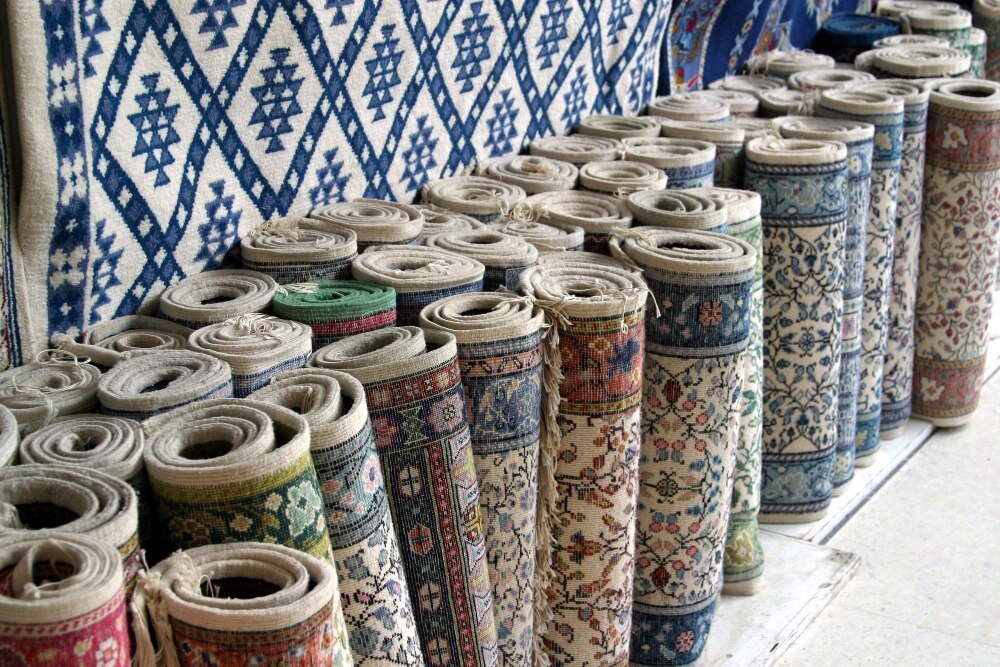
| Carpet rolls | Bedroom carpet and larger living rooms | Continuous colour and pattern create a calmer, more finished look; underlay improves softness and warmth | Installation causes greater disruption, and a damaged area can require replacing a large section |
| Carpet tiles | Home office flooring, hotel carpet areas and corridors, and busy commercial spaces | Modular layouts can define zones, but seams and shade changes remain visible | Faster targeted repairs; replace individual tiles after spills or wear, provided the substrate is smooth, clean, and compatible with the adhesive |
| Rugs | Sitting areas, rentals, or rooms needing flexible decoration | Add warmth and pattern without covering the entire floor; edges can shift or curl | Easy to lift for cleaning or replacement, but they provide less acoustic and thermal coverage |
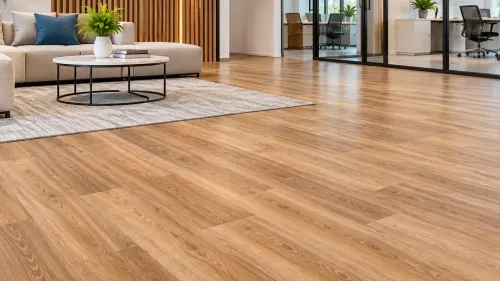
| Wood | Living rooms, dining areas, and bedrooms where a hard-wearing decorative surface matters | Shows grain and keeps a lighter visual structure, but feels colder and less forgiving underfoot | Sweep and clean easily; installation can disrupt the room, while refinishing is more involved than replacing a rug |
| Hard flooring | Kitchens, entrances, and areas exposed to moisture or heavy soil | Practical and visually clean, but offers less footfall comfort and sound absorption | Simple spill response and durable daily use; cracks, scratches, or stains can be harder to disguise |
For carpet tiles versus carpet rolls, choose tiles when localized replacement outweighs seamless appearance. Choose rolls when comfort, pattern continuity, and a polished residential finish lead the flooring comparison.
Request Performance Evidence Before You Buy
A heavy carpet is not automatically a durable carpet. Compare face weight with tuft density, fibre type, twist, total thickness, and backing type; high face weight with loose tufts can crush faster than a shorter, denser construction.
| Evidence to compare | What it reveals | Warning sign |
|---|---|---|
| Face weight and tuft density | Material quantity and resistance to crushing | A high face weight with sparse tufts |
| Total thickness and backing type | Cushion, dimensional stability, and adhesive compatibility | Thick pile hiding weak or unsuitable backing |
| Fire-performance documentation | Reaction-to-fire classification for the intended building use | No named test standard or classification |
| Stain treatment and colourfastness | Likely appearance after spills, sunlight, and cleaning | Treatment without cleaning limits or test details |
| Slip performance | Footing under the specified dry or wet condition | No result for the actual installation |
Use sample testing before approving a roll or tile. Rub a spare sample repeatedly with a shoe, press it under a weighted object overnight, spill the cleaning products you use, and inspect the pile after drying. Check for fibre shedding, edge curling, backing separation, colour transfer, and visible pile direction.
For stairs and corridors, ask Dels Decor to show a short, dense or patterned sample and explain fastening, seam placement, edge treatment, and pile direction. Request fire documents, moisture requirements for the slab and adhesive, and the installation method in writing; an attractive sample cannot prove safe performance.
Related products
 | Carpet Tiles & Carpet Rolls Carpet Tiles & Carpet Rolls with Dels Décor Transform Your Space with Dels Décor Flooring Solutions At Dels Décor, we bring you premium carpet tiles... View product → |
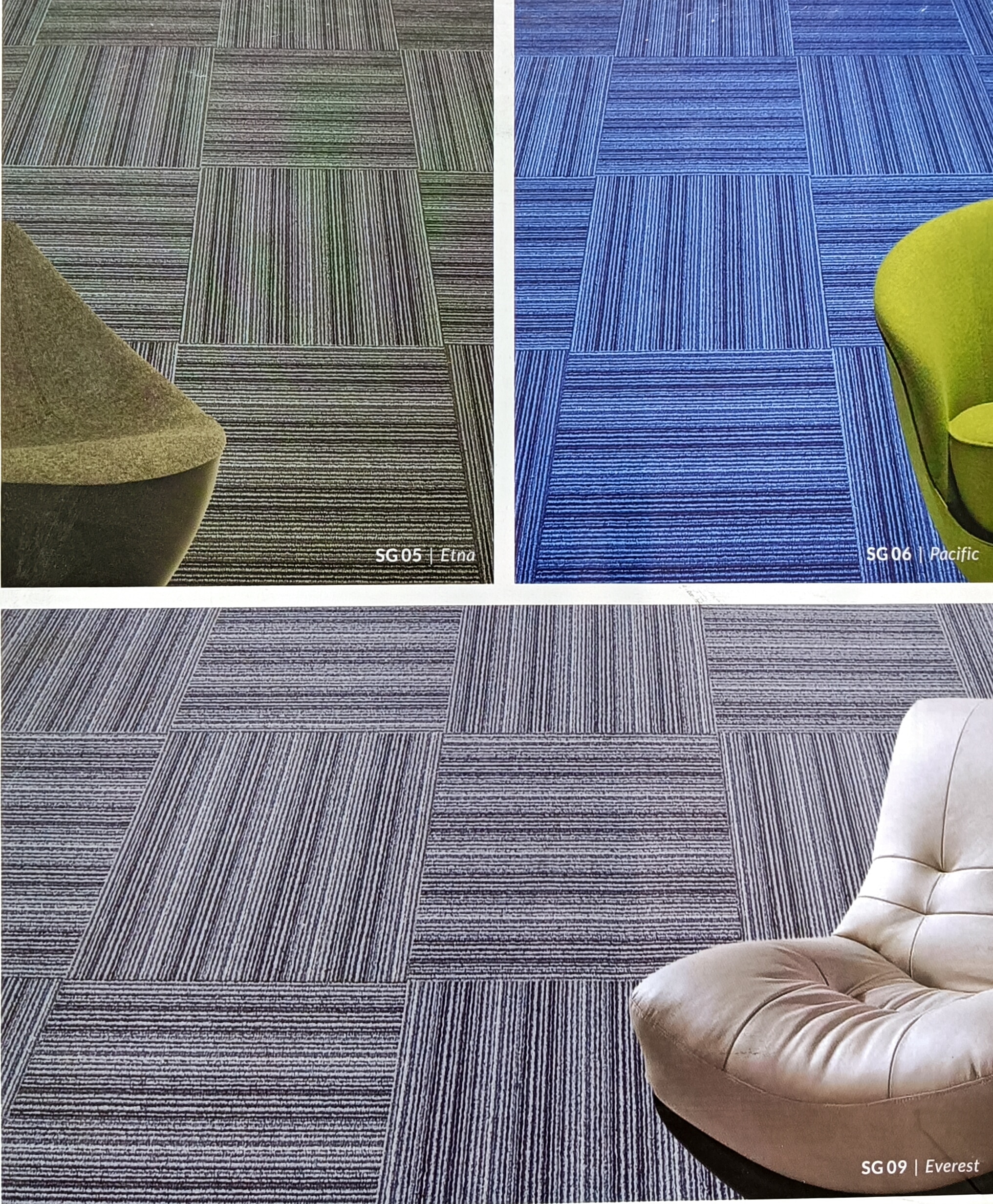 | Carpet Tiles ₹150 Yarn -100% Nylon 6 Backing - PVC with FiberGlass Pile Hight - 3.0 mm Size - 50cm*50cm View product → |
Know When Carpet Is the Wrong Flooring Choice
Reject carpet when moisture, spills, cleaning demands, or installation conditions outweigh its comfort and decorative value. Choose a hard floor where you need easy wet cleaning, especially in damp rooms, outdoor spaces, or areas with frequent spills.
Reject it if:
- A leak, rising damp, or condensation problem remains unresolved. Complete moisture testing on a concrete slab and meet the limits specified by the carpet, adhesive, and substrate manufacturers; trapped moisture can damage backing, create odours, and increase mould risk.
- The room receives frequent spills that need immediate washing rather than blotting and extraction. Stains can penetrate carpet fibres and underlay, while repeated wet cleaning can leave the assembly damp.
- You cannot provide adequate ventilation after installation. New carpet and adhesive can produce VOC emissions, so select low-emission products and ventilate the room before regular occupancy.
- The substrate is uneven, dirty, or unsuitable for the selected adhesive or installation method. Broadloom carpet usually needs power stretching; knee-kicking alone can leave wrinkles, buckling, and failed seams.
- The household will not follow the required carpet maintenance. Regular vacuuming, prompt spill removal, and professional cleaning protect appearance and indoor air quality; neglect allows dust and other particles to accumulate.
A carpet is also a poor choice where drying time, access for cleaning equipment, or replacement disruption is unacceptable. In those spaces, sealed hard flooring offers a simpler response to water and soil.
Frequently asked questions
How should carpet comfort match the way a room is used?
Choose deep, soft pile for low-traffic bedrooms and low, dense pile for busy areas. Deep pile can flatten under office chairs and constant foot traffic.
How do carpet colour and pattern affect interior decoration?
Light colours make a room feel more open, while darker shades and patterns conceal marks. Coordinate the carpet with wall colour, furniture, and natural light.
Which carpet format suits different spaces?
Use broadloom for continuous coverage, carpet tiles for replaceable sections and flexible layouts, and rugs for defined areas without permanent wall-to-wall flooring.
What performance evidence should you request before buying carpet?
Ask for specifications covering pile height, pile density, fibre type, wear rating, cleaning instructions, stain treatment, backing, and warranty terms.
When is carpet the wrong flooring choice?
Choose another flooring type where moisture, frequent spills, heavy soil, difficult cleaning, or rolling loads create problems that carpet cannot handle.