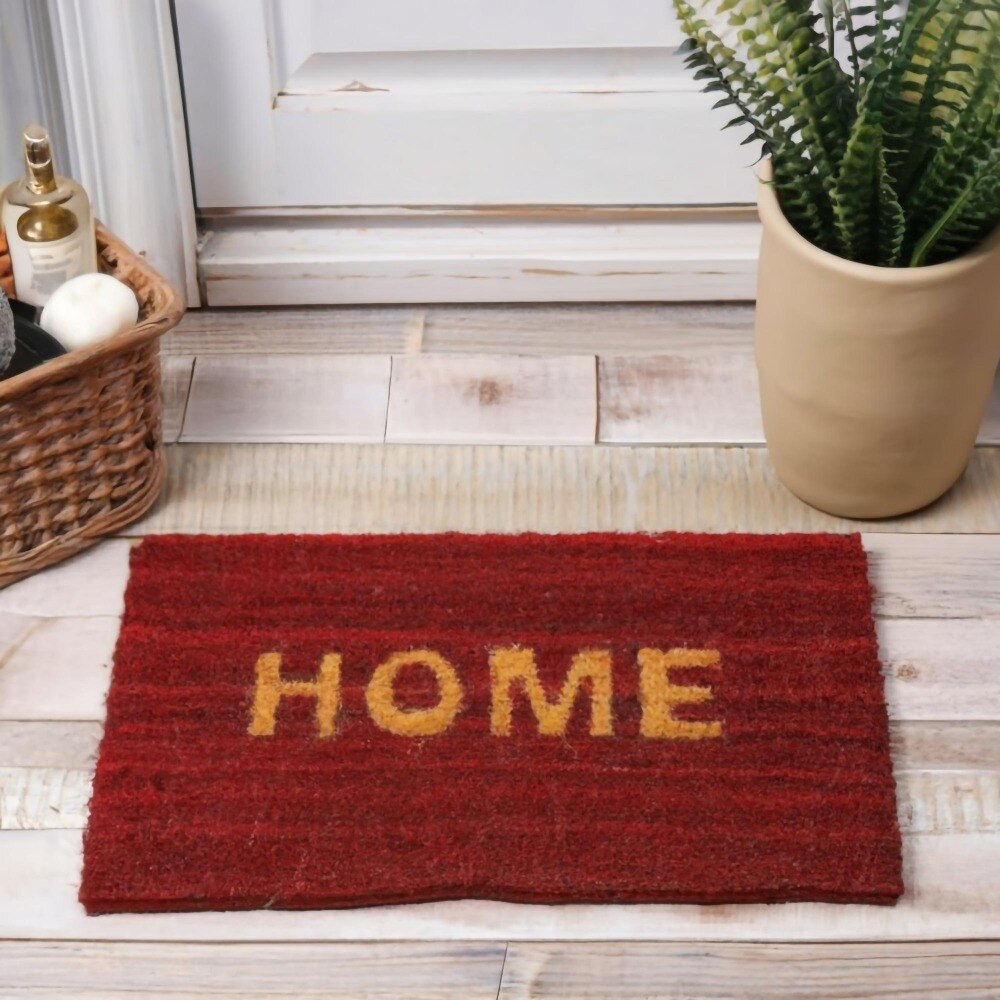
Grit, mud, and moisture enter on shoe soles long before they become visible on interior floors, while a poorly chosen mat can slide, curl, or hold water against the surface below. You will be able to match mat types, dimensions, backing, placement, and maintenance to the entrance conditions you actually have.
Key takeaways
- Use scraper mats for grit and wiper mats for fine dust and moisture.
- Match the mat surface to indoor, outdoor, wet, or high-traffic conditions.
- Choose enough length for several footsteps without creating a trip edge.
- Check the backing, floor contact, and slip performance before installation.
How Door Mats Stop Soil and Moisture at the Threshold
An entrance mat reduces tracked-in dust and grit by interrupting the dirt carried on shoe soles before it reaches the main floor. A coarse scraper surface loosens compacted soil, while a textile wiper surface removes finer particles and absorbs water.
Each footfall leaves part of the load behind, so the mat reduces abrasion on wood finishes, stone, carpet, and resilient flooring.
The strongest moisture control at entrances uses enough walk-off distance for several steps, not a small decorative mat placed beside the doorway. Keep the walking route over the mat; a person who steps around it carries mud and moisture straight indoors.
During rain, a saturated mat can transfer water back to shoes, while compacted grit can stop it wiping effectively.
A mat lowers cleaning demand, but it does not replace cleaning. Vacuum or shake out dry soil, and wash or extract the mat when it becomes loaded with fine particles, mud, or road residue; allow it to dry fully before reuse.
Continue sweeping, vacuuming, and damp-cleaning the floor because soil passes through footwear and around the mat. A neglected damp mat can develop odour and microbial growth, turning a source-control measure into a hygiene and slip problem. Inspect it after heavy traffic or wet weather rather than relying on appearance alone.
Match the Mat Surface to the Entrance Conditions
Choose the surface by the contamination it must remove, not by appearance. A covered entrance needs a wiping mat to capture fine dust and light moisture; an exposed doorway needs a weather-resistant scraping surface with drainage. A small decorative mat cannot handle either job for long.
| Entrance condition | Best mat type and construction | Why it works |
|---|---|---|
| Covered, low to moderate traffic | Wiping mats with polypropylene or nylon fibres and a stable rubber or PVC backing | Removes fine soil and light moisture without staying saturated |
| Exposed entrance, rain or monsoon mud | Scraping mats with coarse rubber, polypropylene, or aluminium-frame inserts | Breaks up mud and scrapes grit while allowing water to drain |
| Wet threshold or indoor area after an exterior scraper | Absorbent mats with dense textile fibres, placed on a slip-resistant backing | Pulls remaining moisture from footwear before it reaches the floor |
| Dusty or sandy approach | Scraping mats with stiff, closely spaced surfaces | Dislodges abrasive particles that a soft textile mat would spread |
| High-traffic entrance or commercial queue | Combination entrance-matting systems using an exterior scraper and interior nylon or polypropylene wiper | Handles coarse soil first, then finer dust and moisture across repeated footfall |
Coir is useful for dry, covered scraping because its stiff fibres catch coarse dirt, but continuous rain can leave it wet and cause shedding. For heavy traffic, synthetic fibres dry faster and resist compression better; aluminium-frame systems suit demanding entrances when drainage and replaceable inserts matter.
Keep both surfaces on the actual walking route, or the system loses its advantage.
Choose a Mat That Provides Enough Footfall and No Trip Hazard
Choose a door mat size that covers the entire walking line and gives each shoe several useful contacts, not just the space directly in front of the door. Measure the route from the outside approach through the threshold and first several steps inside; this is the required walk-off distance.
| Option | Coverage | Best use |
|---|---|---|
| Small decorative mat | One or two footfalls | Low-use doorway with little exposure |
| Scraper plus wiper mats | Several feet of continuous contact | Homes, offices, and entrances receiving rain, grit, or mud |
| Recessed or permanently secured system | Full route with flush edges | Busy entrances, queues, luggage, and wheeled traffic |
Keep the mat where people actually walk. A long mat fails if visitors step around it, while a second mat inside adds little if the doorway directs traffic elsewhere. Leave clearance for the full door swing so the slab does not catch, bunch, or push the mat.
Eliminate trip hazards before opening the entrance. Choose a flat mat with a non-slip backing, secured edges, or a properly detailed recessed well; replace it if it curls, creeps, or develops a raised edge. Check that the backing suits the floor, since dampness, sunlight, rubber, latex, or PVC can stain or soften some surfaces.
Return a cleaned mat only when it is fully dry and flat.
Check Backing and Slip Performance Against the Floor
Do not judge a mat by absorbency alone: a wet textile can slide, while a rubber-backed mat can grip firmly yet leave water on the floor. Compare the backing’s stability, the surface texture when wet, drainage route, and compatibility with the flooring finish as separate questions.
| Construction | Grip and drainage | Floor compatibility |
|---|---|---|
| Rubber backing | Strong grip on clean, dry floors; solid backing drains poorly unless the mat has channels | Test before use on vinyl, resilient flooring, sealed wood, or coatings because heat and dampness can cause staining or residue |
| PVC backing | Good initial grip; perforated or channelled designs improve drainage | Plasticizers can soften or discolor some floors, so follow both manufacturers’ instructions |
| Latex backing | Flexible and grippy; drainage depends on the mat’s weave or holes | Treat it as a potential staining risk on sensitive or coated floors and test an inconspicuous area |
| Coir mats | Coarse fibres scrape soil and allow water through; loose fibres do not guarantee stable footing | Use a compatible tray or backing, since coir alone can shed, shift, or scratch polished finishes |
| Aluminium-frame entrance systems | Rigid frames stay flat, while inserts scrape, wipe, and drain through open channels | Best in a recessed, level well; protect adjacent flooring from raised edges and movement |
Check the installed mat after rain and after cleaning. It must lie flat, remain stationary, and leave no detergent, wax, or oily film. On an accessible route, secure exposed edges, keep carpet-like pile at or below 1/2 inch, and bevel transitions up to 1/2 inch.
Keep the Entrance Mat Effective Through Cleaning and Replacement
A mat stops protecting the entrance when it is saturated, packed with grit, or left damp. Heavy footfall, rain, monsoon mud, sand, road salt, and construction dust determine cleaning frequency; a mat that looks clean can still hold abrasive particles.
Schedule mat vacuuming for routine soil removal, then use washing and extraction when fibres hold moisture or compacted dirt.
Ask the supplier or installer to confirm:
- Which cleaning method, detergent, rinse, and drying time suit the mat and your floor finish.
- How often to inspect it under your traffic and weather conditions, rather than relying on a universal calendar.
- Whether saturated mats can be removed quickly without exposing a slippery walking route.
- How many spare mats you need to keep the entrance covered while cleaned mats dry.
- How the mat will dry fully, lie flat, and avoid curled edges before it returns to service.
- Whether the backing resists movement after cleaning and leaves no waxy, oily, or detergent residue on the adjacent floor.
- Which signs require replacement: crushed fibres, permanent dampness, loose backing, frayed edges, or reduced water pickup.
If Dels Decor is supplying or installing the mat, ask for this maintenance plan in writing and have the installer show where replacement mats can be stored. Never return a damp mat indoors: it can transfer moisture back to shoes, create odour, and encourage microbial growth.
A mat reduces cleaning demand; it does not replace floor cleaning or ventilation.
Related product
 | Doormats Doormats ₹55 Wholesale – Durable & Stylish Collection by Dels Decor Dels Decor offers a premium range of doormats wholesale, designed to combine functionality,... |
Frequently asked questions
How does a door mat stop soil and moisture at the threshold?
A coarse scraper surface loosens compacted soil from shoe soles, while a textile wiper surface removes finer particles and absorbs water before they reach the main floor.
Which door mat surface suits different entrance conditions?
Use a coarse scraper surface where shoes carry grit and compacted soil. Use a textile wiper surface where fine dust and moisture need removal.
How do you choose a door mat size that avoids trip hazards?
Choose a mat that provides enough walking surface for the entrance footfall, then check that its edges lie flat and do not obstruct the doorway or walking route.
What should you check on a door mat backing?
Check that the backing sits securely against the floor, remains flat, and provides suitable slip performance for the floor type and entrance conditions.
How do you keep an entrance mat effective?
Remove collected soil and moisture through regular cleaning, inspect the surface and edges, and replace the mat when wear reduces its scraping, wiping, absorption, or slip performance.