The right curtain depends on more than colour: fabric construction, window orientation, room dimensions, privacy needs and installation limits all affect the result. By the end, you will be able to compare materials, calculate curtain dimensions, test colours in real daylight and prepare a clear order and installation brief.
Key takeaways
- Match weave and lining to the light and privacy your room needs.
- Use window direction to choose curtain colour and opacity.
- Measure track width, ceiling height and required fullness before ordering.
- Specify tailoring, access clearance and installation details in writing.
Match Fabric Construction to Light, Privacy and Daily Use
Fabric weight alone does not tell you how much light a curtain blocks. A loosely woven heavy linen can remain translucent, while a lighter cloth with an opaque lining can darken a room substantially. Match the weave and lining to the room’s actual use.
| Construction | Light and privacy | Daily-use fit |
|---|---|---|
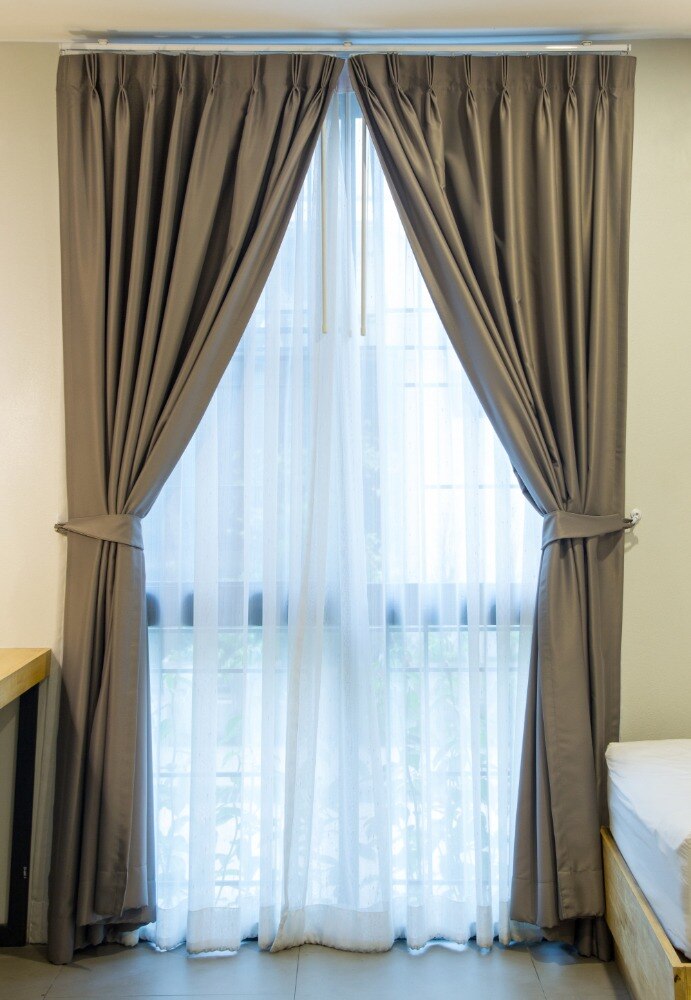
| Voile curtains or open-weave sheer fabric | Filters daylight; offers daytime privacy only when outdoors is brighter | Suits living rooms where you want brightness and frequent opening |
| Cotton curtains in a medium weave | Softens light and gives moderate privacy | Works in general living spaces; check shrinkage before cleaning |
| Polyester blend curtains | Resists creasing and shape changes; light control depends on weave | Practical for frequently opened curtains and busy households |
| Opaque fabric with thermal lining | Reduces glare and visibility; improves heat control more than fabric alone | Suits bedrooms and sun-exposed rooms needing regular privacy |
| Blackout curtains with blackout lining | Blocks substantially more visible light and provides strong privacy | Best for bedrooms, media rooms and glare-sensitive work areas |
A sheer fabric does not provide reliable night privacy: interior lights can reveal silhouettes through the window. Add an opaque second layer or lining. Blackout construction controls visible light, not automatically heat transfer; thermal lining, multiple layers and fewer air gaps matter for insulation.
For humid rooms or curtains you open daily, check the cleaning label, lining compatibility and any pre-shrinking requirement. Linen, cotton and viscose can crease, shrink or change shape more than synthetic blends, turning an attractive choice into a maintenance problem.
Read the Window’s Direction Before Choosing Colour or Opacity
Direction should determine your curtain colour, opacity and solar protection because the same fabric changes appearance as daylight moves across the room.
| Direction | Daylight effect | Suitable curtain choice |
|---|---|---|
| East-facing windows | Strong, low-angle morning sun can create glare and fade furnishings. | Choose medium or heavy opacity, a lining, and light-reflective colours such as soft ivory, sand or pale grey. |
| West-facing windows | Harsh afternoon sun brings the greatest heat and glare, especially in summer. | Use lined or blackout curtains, close them before direct sun arrives, and choose pale colours with a solar-reflective backing. |
| North-facing rooms | Light is cooler, bluer and weaker, so dark colours can look flat or cold. | Choose warm whites, cream, beige, muted peach or warm green in sheer or medium opacity to preserve brightness. |
| South-facing rooms | Longer, stronger daylight increases heat and UV exposure. | Use medium-to-heavy opacity with a thermal or UV-reducing lining; pale, fade-resistant colours limit heat absorption. |
Low-angle sun can enter through gaps at the sides or below the fabric, so outside-mounted curtains with generous overlap protect better than a treatment fitted tightly inside the recess. Close them before sunlight reaches the glass, not after the room has heated.
View a large swatch in the actual room during morning, midday and afternoon. Compare the natural light and curtain colour beside the floor and walls, because blue north light and warm south light can shift the fabric’s apparent tone. A lining slows fading but cannot prevent it.
Measure for Fullness, Height and Clear Window Access
Calculate width from the curtain track length, not the glass. If the treatment sits outside the frame, extend the track 15–30 cm past each side so the fabric stacks clear of the window and reduces side-light gaps. For an inside fit, use the window recess measurement and leave enough clearance for the fabric and hardware.
- Measure the installed or planned curtain track length.
- Multiply it by the curtain fullness ratio: 1.5–2 for economical gathers, or 2–2.5 for fuller pleats and gathers.
- Divide the resulting fabric width between the panels, then confirm the heading style’s required allowance with the tailor.
A wide track can make a modest window look broader, while a track that ends at the frame leaves the opening visually cramped. Check stackback—the space occupied by gathered fabric—to ensure handles, shutters and the opening path remain clear.
Measure finished length from the actual rod or track position, accounting for the heading, hooks or rings. Floor-length curtains should finish at the floor or sit slightly above it; a small clearance avoids dragging dirt across carpet or wood.
Floor-length curtains also need coordination with ceiling height, skirting boards and radiators, because fabric over a radiator can trap heat. Sill-length curtains should finish above the sill or just below it without blocking airflow or catching on the ledge. Measure after flooring and skirting are installed.
Choose the Right Treatment for Each Room and Its Constraints
Curtains are the practical choice when you need adjustable privacy, soft acoustics, insulation and a fabric finish that can be removed for cleaning. Bedroom curtains suit blackout lining and full-height coverage; living room curtains work well when you want daylight control without permanently covering the glass.
| Option | What it means | When it applies |
|---|---|---|
| Curtains | Side-stacking fabric panels with adjustable openness | Bedrooms, living rooms, children’s room curtains, and wide windows where softness and insulation matter |
| Roller blinds | One compact fabric roll that gives precise height control | Kitchen curtains are often better replaced by wipeable roller blinds near sinks, worktops and cooking vapour |
| Roman blinds | Fabric folds that stack upward | Use for a tailored look on moderate-sized windows, but avoid bulky fabrics in damp rooms |
| Vertical blinds | Individual vanes rotating and drawing sideways | Useful for patio doors and large glazed commercial spaces because each section controls glare and access |
| Window film | Adhesive or applied solar, privacy or decorative layer on the glass | Choose it when you need constant daytime privacy, UV or heat reduction, and no projecting hardware |
Match the treatment to hazards, not only style. Bathroom window treatments need moisture-resistant materials; untreated linen can swell or mildew. For children’s room curtains, secure cords and chains out of reach.
Home office glare control usually favours a roller blind or solar film when a screen reflects sky or afternoon sun, while curtains provide better side-light coverage.
Turn the Fabric Choice into a Clear Tailoring and Installation Order
Do not approve cutting from a verbal promise. Turn the selected curtain fabric into a written order that fixes its performance, dimensions, tailoring and installation details.
1. Inspect the physical curtain fabric swatch in morning and evening light. Record the fibre content, weave, opacity, colourfastness rating or test result, and GSM fabric weight; weight alone does not prove blackout performance. Check the reverse side for a coating, lining grip and colour variation, then record the dye lot.
2. Make the quotation specify the pole or track length, fullness ratio, finished drop, side returns, lining, heading style, number of panels, hems and cleaning method. Confirm heading compatibility with the chosen track, rings or rod.
Add a stated shrinkage allowance and identify whether the fabric will be pre-shrunk; linen, cotton and viscose deserve particular scrutiny.
3. Measure the finished drop from the actual installed pole position, including the heading and rings, after flooring and skirting boards are complete. State whether the hem finishes at the sill, below the sill or just above the floor; a dragging hem can stain carpet and damage on unfinished wood.
Confirm wall anchors, bracket positions and support for lined curtain weight.
If Dels Decor is supplying installation, ask for these measurements and specifications as separate quotation lines rather than accepting “custom curtains” as the description.
4. At handover, use a curtain installation checklist: verify panel count, fabric and dye lot, seam direction, level track, secure brackets, smooth operation, agreed drop and absence of stains, creases or light gaps. Keep the swatch and signed order with the final invoice.
Related product
 | Curtain Cloths ₹470 Wholesale – Premium Fabric Collection by Dels Decor Dels Decor offers an exclusive range of curtain cloths wholesale, designed to enhance interiors... View product → |
Frequently asked questions
How does curtain fabric construction affect light and privacy?
Weave density and lining determine light control more reliably than fabric weight alone. Compare loosely woven fabrics with opaque or blackout-lined options.
How does window direction influence curtain colour and opacity?
Read the window’s direction and observe the strongest daylight before choosing colour, transparency or lining. Bright-facing windows may need greater opacity and light-filtering colours.
How should you measure windows for curtain fullness and height?
Measure the track or pole width, finished drop and space beside the window. Choose fullness based on the fabric and leave enough clearance to open the curtains fully.
Which curtain treatment suits different rooms?
Choose according to each room’s privacy, glare, moisture, ventilation and daily-use constraints. Bedrooms may need stronger light control, while living areas often benefit from layered treatments.
What details should you confirm before tailoring and installation?
Put the fabric, lining, finished measurements, heading style, fullness, hem, track or pole position and window-access requirements in the order.